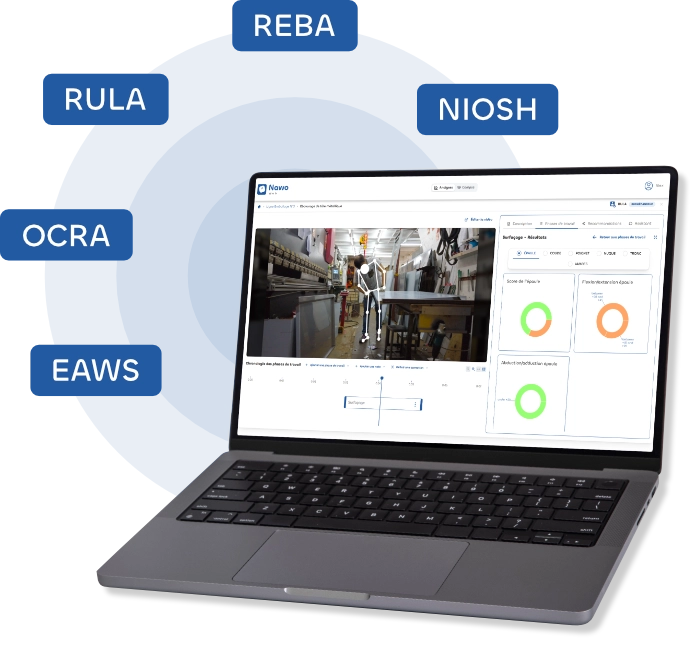
Access detailed ergonomic tools to thoroughly analyze the biomechanical risks associated with MSDs. Optimize prevention and improve working conditions through precise and effective analyses.
Ergonomic analysis methods for preventing MSDs:
The RULA Rating System
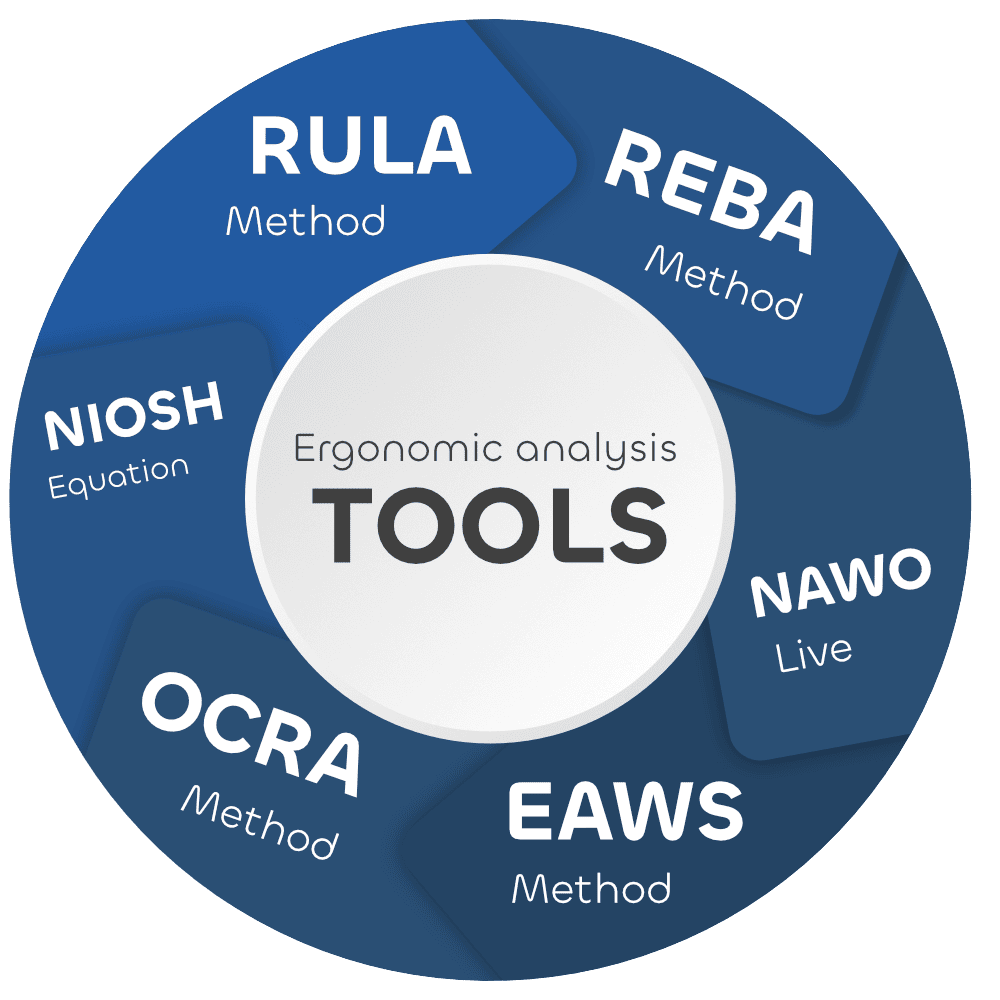
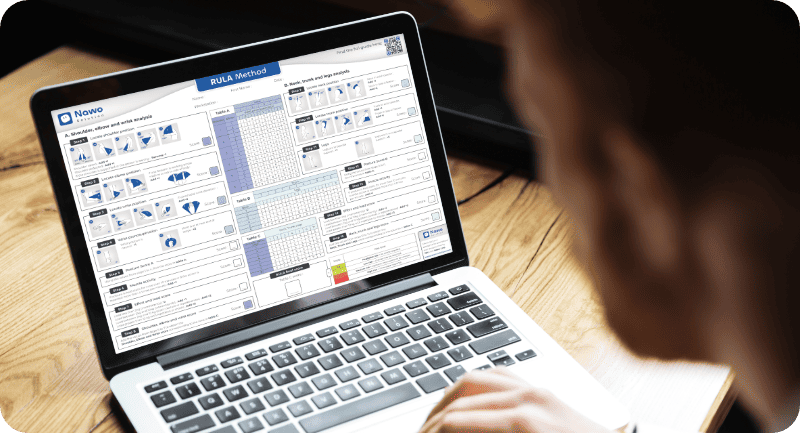
The RULA method is used to assess the postures of the upper limbs. It highlights the risks associated with postures during the observed work cycle. The final RULA score ranges from 1 to 7.
The REBA method is an evaluation tool for postural risk assessment of the entire body. It follows the same scoring principle as RULA. The final REBA score ranges from 1 to 15.
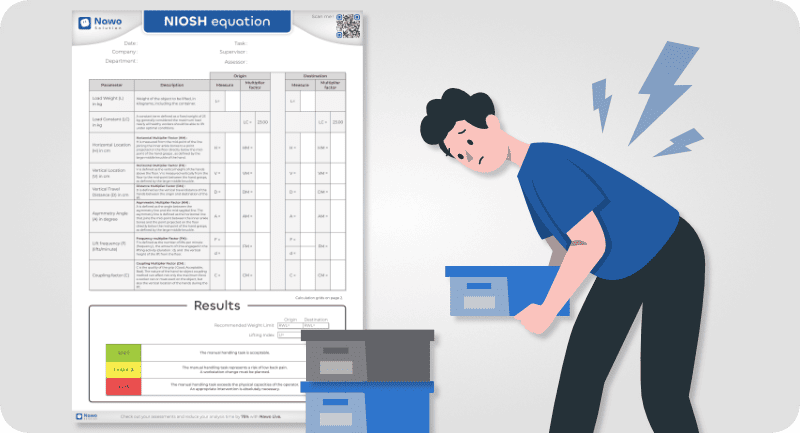
The NIOSH equation is an evaluation method for manual handling tasks. Based on the parameters related to the workstation, it is possible to calculate the maximum permissible load and the lifting index, which indicates the level of risk.
The OCRA method assesses and minimizes the risks associated with repetitive tasks by analyzing factors such as posture, force, and task duration, with the aim of preventing musculoskeletal disorders.
The EAWS method is an evaluation tool that combines aspects of posture, load handling, and repetition. This method is used for the proper organization and planning of work.